Lead Attribution for UK SMEs: The Guide to Fixing Broken Tracking
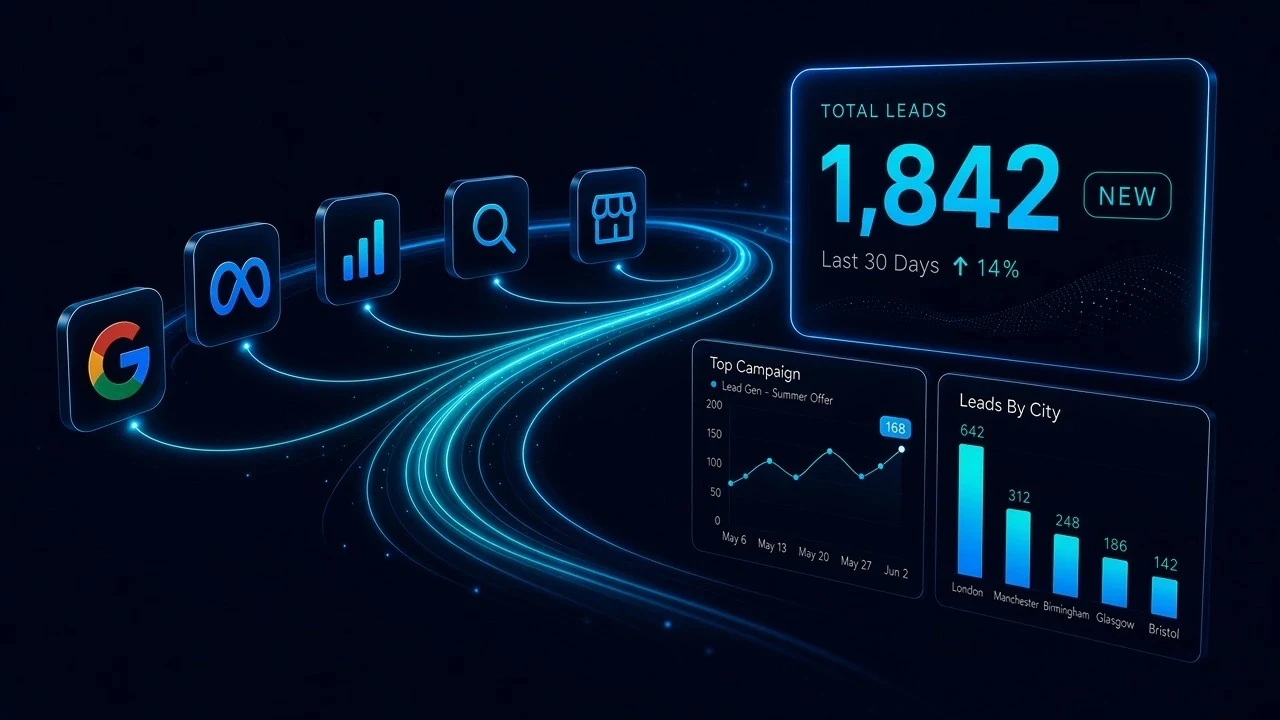
If you run a small or medium business in the UK, you already spend money on Google Ads, Meta, SEO and maybe a bit of local marketing. What you probably don't have is a clear answer to the one question that actually matters: which channel is bringing in real enquiries? That gap is exactly what lead attribution for UK SMEs is meant to solve — and for most small businesses, it's broken from day one. This guide walks through why it breaks, and how to fix it without hiring a data analyst or buying enterprise software.
Why Lead Attribution for UK SMEs Usually Fails
Most small businesses rely on whatever their ad platform or Google Analytics reports by default — and that default is last-click attribution. It gives 100% of the credit to the very last thing someone clicked before they filled in a form or picked up the phone.
Here's the problem. A real customer journey rarely looks like one clean click. A typical path looks like this:
- Someone sees your Meta ad on their phone during lunch and forgets about it.
- Two days later they search your service on Google.
- They tap a Google Business Profile map-pack listing.
- They ring you directly from their car.
Last-click reporting hands all the credit to Google Business Profile. Meta — the channel that actually started the journey — gets zero. If you're judging performance on that number, you'll cut the campaign that was quietly generating demand, and keep spending on the channel that simply closed leads someone else warmed up.
This is the core reason accurate lead attribution matters so much for small businesses specifically — SME budgets are tight, and one wrong decision based on bad data can wipe out a month's marketing spend.
What Proper Multi-Channel Attribution Looks Like
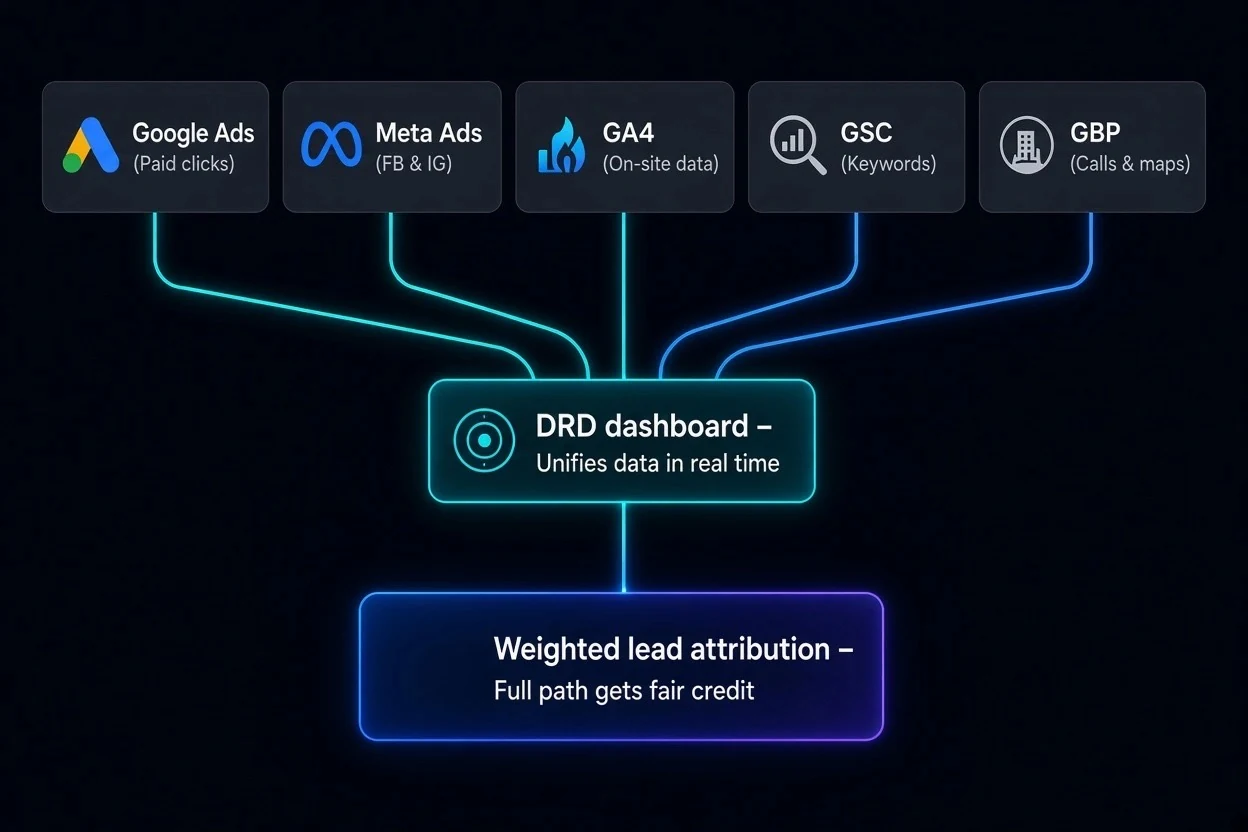
The fix isn't more spreadsheets — it's multi-channel attribution: joining up every touchpoint a lead had with your business before it converted, rather than crediting only the last one. Done properly, multi-touch attribution tools connect data from:
- Google Ads — paid search clicks and conversions.
- Meta Ads — Facebook and Instagram, paid and organic.
- GA4 — on-site behaviour and form submissions.
- Google Search Console — organic keyword performance.
- Google Business Profile — calls, direction requests and map-pack activity.
Once those five sources are joined against your real enquiries, you get a picture that's actually true to how UK service buyers behave — and a genuine multi-touch attribution tool will show weighted credit across the whole path, not just the final step.
Why UK SMEs Think Attribution Dashboards Are Out of Reach
Enterprise attribution platforms are usually built for companies with in-house analysts, six-figure marketing budgets and weeks of implementation time. That's not the case for most UK SMEs, and it's why so many small business owners give up and go back to guessing.
The good news: an attribution dashboard for a UK small business doesn't need to be complicated to be accurate. It needs three things — one connection per platform, a single data model that reconciles the numbers, and a dashboard that updates on its own.
Introducing the Dashient Reporting Dashboard (DRD)
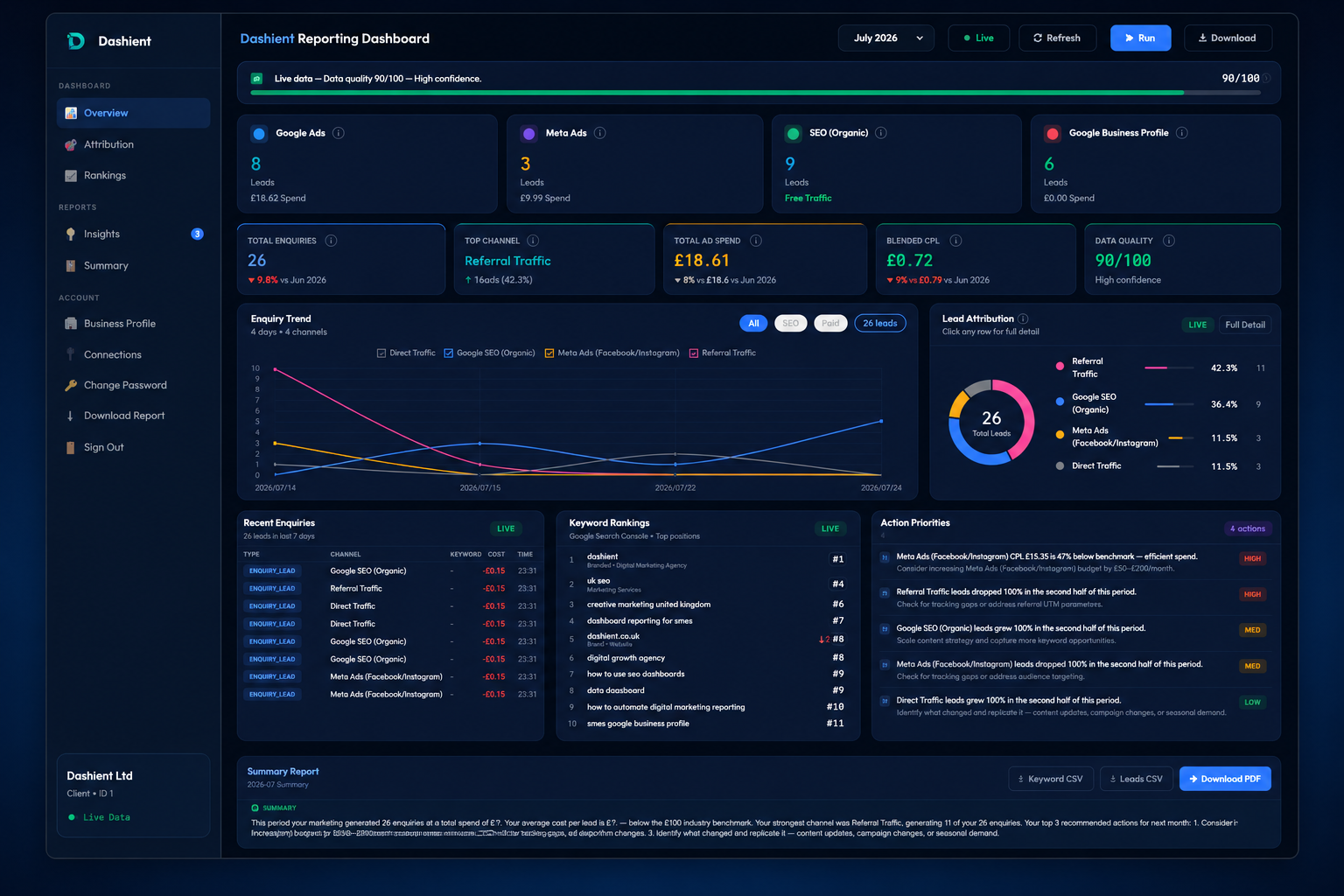
This is exactly the gap the Dashient Reporting Dashboard (DRD) was built to close. DRD is a lead attribution and real-time analytics tool built specifically for UK service businesses that need clear answers without an in-house data team.
Setup typically takes 1–3 hours across two calls, not weeks. One Google login covers Google Ads, GA4, Search Console and Google Business Profile in a single stroke; one Meta login covers Facebook and Instagram. Every source is normalised into a single schema, so your agency's report, GA4 and your ad platform totals finally agree with each other.
With DRD, every enquiry — form submission, click-to-call tap or direction request — is matched back to Google Ads, Meta, organic search, Google Business Profile or direct, using campaign tracking parameters where a direct match is possible. You get:
- A donut view of leads by channel, plus a drill-down table of individual enquiries.
- Blended cost-per-enquiry calculated live across paid, organic and local.
- Daily-updated tracking instead of a monthly PDF.
- Unlimited one-click exports — PDF reports, leads CSV, keyword rankings CSV.
- Weekly review flags showing which channels and pages moved, and why.
In short, DRD turns real-time attribution data into something you can actually act on, without learning a new platform or hiring anyone.
How to Start Fixing Your Attribution This Month
- Audit what you're currently tracking — most SMEs will find only last-click data exists.
- Connect your Google and Meta accounts to a single attribution dashboard, rather than exporting each one separately.
- Match enquiries — calls, forms and direction requests — back to source, not just sessions.
- Review cost-per-enquiry by channel weekly, not monthly, so budget decisions are based on current data.
If your reporting still lives in five browser tabs and a spreadsheet, it may also be worth checking what Google Ads cost in the UK in 2026 right now, so you can weigh what you're spending against what attribution reveals you're actually getting back. Agencies managing several clients face the same problem at a bigger scale — we cover that side of it in our guide to marketing agency reporting tools.
Frequently asked questions
The Bottom Line
Lead attribution for UK SMEs isn't a luxury reserved for big companies with data teams — it's the difference between guessing which channel works and knowing for certain. Fix the tracking, and every marketing decision after that is based on evidence instead of assumption.
Want to see your own leads mapped this way? Book a free audit with Dashient and find out which of your channels is actually driving business. You can also follow Dashient on LinkedIn and Facebook.