Google Ads Cost UK 2026: How Much Should a Service Business Spend?

In 2026, a sensible Google Ads cost for a UK small business is £900–£3,000 a month in ad spend, plus a £500–£1,500 management fee if you're not running it yourself. Average UK cost-per-click ranges from £1.50 (home services) to £12 (legal). Below £900/month, most accounts don't generate enough data to work properly. But the budget is only half the problem — the section below on why most UK businesses can't actually see if Google Ads is working matters just as much.
For most UK service businesses in 2026, that £900–£3,000 range only becomes useful once you break it down by vertical, by geography, and by what you're actually trying to prove — so this guide skips the vague averages and gives you the real Google Ads costs by industry, plus the honest framework to work out what your own business can afford.
I'll be direct: I've watched UK businesses waste their first £3,000 on Google Ads not because the platform doesn't work, but because they set a budget before they answered the questions this article opens with — and because, weeks later, they still couldn't tell you which pound actually brought in a customer. If you skip either of those, no amount of budget will save you.
Google Ads cost UK 2026 at a glance
- Typical UK Google Ads budget: £900–£3,000/month ad spend, plus £500–£1,500/month management if outsourced.
- UK cost-per-click range: £1.50 (home services) to £15 (B2B professional services), with legal the most expensive vertical.
- Minimum viable budget: roughly £30/day (£900/month); below that, Smart Bidding rarely exits its learning phase.
- Don't forget: Google Ads charges 20% VAT on top of UK ad spend.
- The number that actually matters: not CPC, but blended cost-per-enquiry across every channel a customer touches — which is exactly what most businesses can't see. More on that below.
The three numbers you need before setting a Google Ads budget
Before you decide "we'll spend £1,500 a month", work out three things.
Your average customer value. Not revenue — gross profit per customer. A plumber invoicing £250 for a call-out with £120 gross margin has very different economics from a solicitor invoicing £2,500 with £2,000 gross margin.
The most you can afford to pay to acquire one customer (your target CAC). A common rule for service businesses is 15–30% of gross profit per customer, though longer client relationships justify higher figures.
The realistic conversion rate on your website. Most UK landing pages convert paid traffic at 3–8%. Below 2% is a landing-page problem, not a budget problem.
Once you have those, the maths works backwards. If your target CAC is £60 and your conversion rate is 5%, you can afford up to £3 per click. If your industry's average CPC is £6, you either fix your landing page, tighten your keywords, or accept that Google Ads isn't viable at your current unit economics. That decision has to happen before you spend a pound, not after.
Google Ads cost UK 2026: what businesses actually pay per click
Cost-per-click depends on your industry and your location. These are the realistic 2026 UK Google Ads CPC ranges by sector:
| Industry | UK CPC range (2026) |
|---|---|
| Home services (plumbing, electrical, heating, cleaning) | £1.50 – £5.00 |
| Health and wellness (dental, cosmetic, physiotherapy) | £2.00 – £8.00 |
| Legal services (solicitors, personal injury, family law) | £5.00 – £12.00 |
| Financial services (accountants, IFAs, mortgage brokers) | £4.00 – £10.00 |
| Beauty, salons and personal care | £1.00 – £3.00 |
| Restaurants and hospitality | £0.80 – £2.50 |
| B2B professional services | £3.00 – £15.00 |
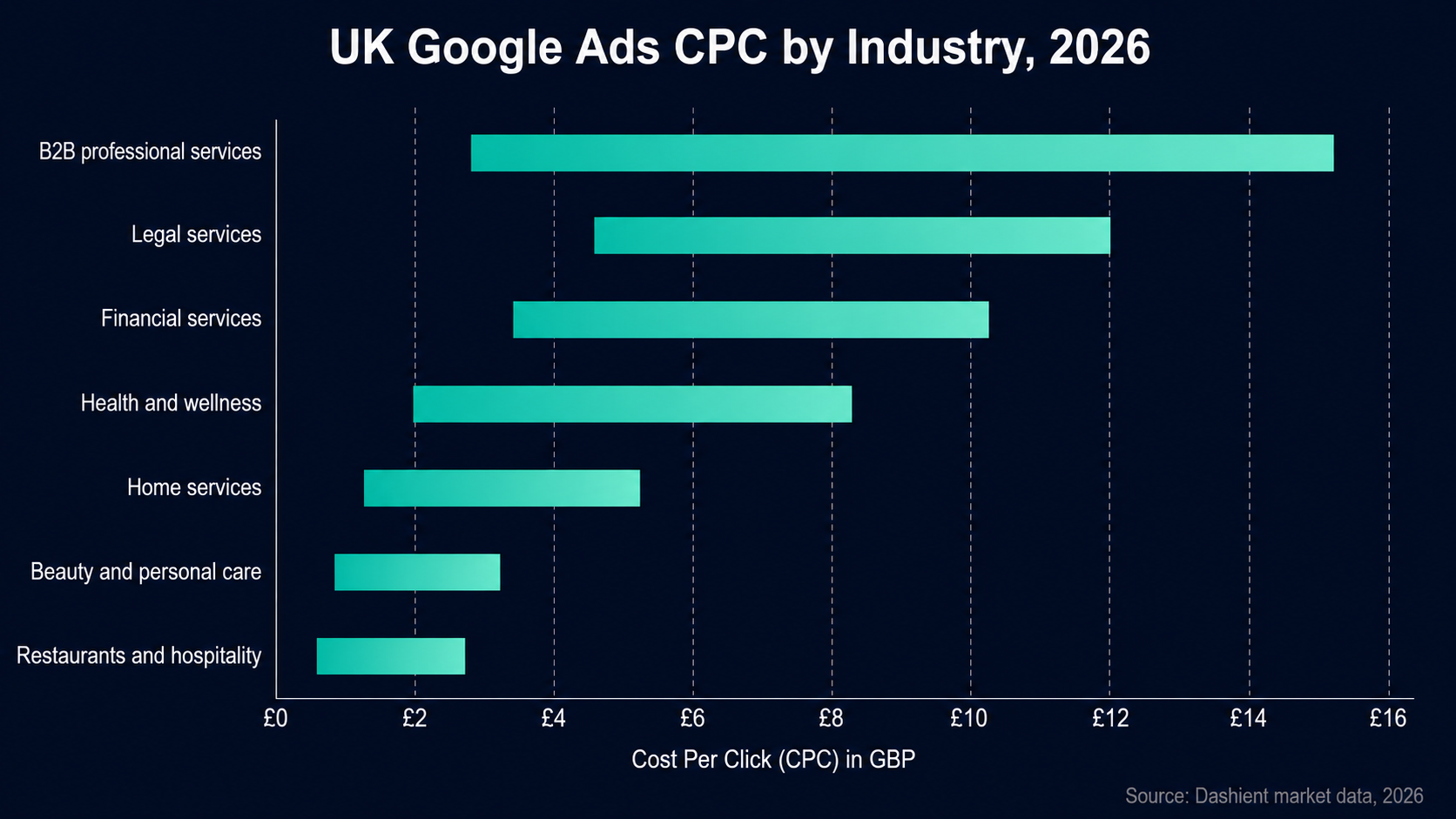
Emergency terms in home services and cosmetic terms like "invisalign" or "dental implants" sit at the top of their ranges, sometimes pushing past £10. Legal remains the most expensive UK vertical overall, with injury and commercial law at the higher end.
London runs 15 to 30 percent higher than the regional UK average for the same keywords. If you're targeting both a regional base and London, expect your blended CPC to sit above your local average.
Realistic monthly budgets by service business type
Ad spend only. Management fees are separate.
- A local trade (plumber, electrician) targeting one town: £900–£1,800 a month.
- A single-site dental or clinic practice: £1,500–£3,000 a month.
- A regional law firm targeting one or two practice areas: £2,000–£4,000 a month.
- A cleaning or landscaping company covering a service area: £800–£2,000 a month.
- A restaurant driving reservations or takeaway orders: £500–£1,500 a month, often combined with Meta Ads for reach.
Everything here assumes you're targeting a defined geographic area. National businesses need proportionally larger budgets because they're competing against far more advertisers.
Ad spend and management fee should never appear on one invoice
Your ad spend goes directly from your own card to Google. Your management fee should be a completely separate transaction. If your agency's monthly invoice bundles them into one figure, you've lost visibility over both, and you can't verify either.
Real 2026 UK Google Ads management fees:
- Freelancer running your account: £200 to £800 a month.
- Agency retainer for a small-to-mid-market account: £500 to £2,500 a month.
- Percentage-of-spend model: 10 to 20 percent of ad spend.
The percentage-of-spend model has a quiet problem. It rewards the agency for growing your budget, whether or not that's the right decision. When cutting spend by 30% is the right call, a percentage-fee agency loses revenue by recommending it. That's why we run our own Google & Meta Ads management on fixed monthly pricing — we're paid the same whether we recommend you spend more or less.
Three warning signs on any agency proposal:
- They won't separate ad spend from management fee on the invoice.
- They run campaigns from their own Google Ads account instead of yours.
- The management fee is £99/month or similar. At that price, your account is on autopilot.
The hidden costs most Google Ads guides don't mention
- 20% VAT on the ad spend.
- Landing page work. Sending Google Ads traffic to your homepage doubles or triples your wasted spend.
- Call tracking software (typically CallRail, ~£45/month, billed directly to your own account).
- Time cost if you're running it yourself. A properly managed small-account programme is 6–10 hours of specialist work a month.
The real problem isn't spend, it's visibility
Here's what actually happens to most UK businesses running Google Ads: the budget is fine, the CPCs are in line with the market, and they still can't answer a simple question — which pound actually brought in that last customer?
That's not a Google Ads problem. It's an attribution problem. A typical enquiry touches three or four channels — a Google Ads click last month, a Meta ad they scrolled past, an organic search result, a look at your Google Business Profile — before someone finally calls. Last-click reporting hands 100% of the credit to whichever channel happened to be last, and quietly ignores the rest. Businesses end up cutting the channels that were actually doing the work, and pouring more budget into the one that just happened to close the deal. We break this down in detail in why last-click attribution fails UK service businesses.
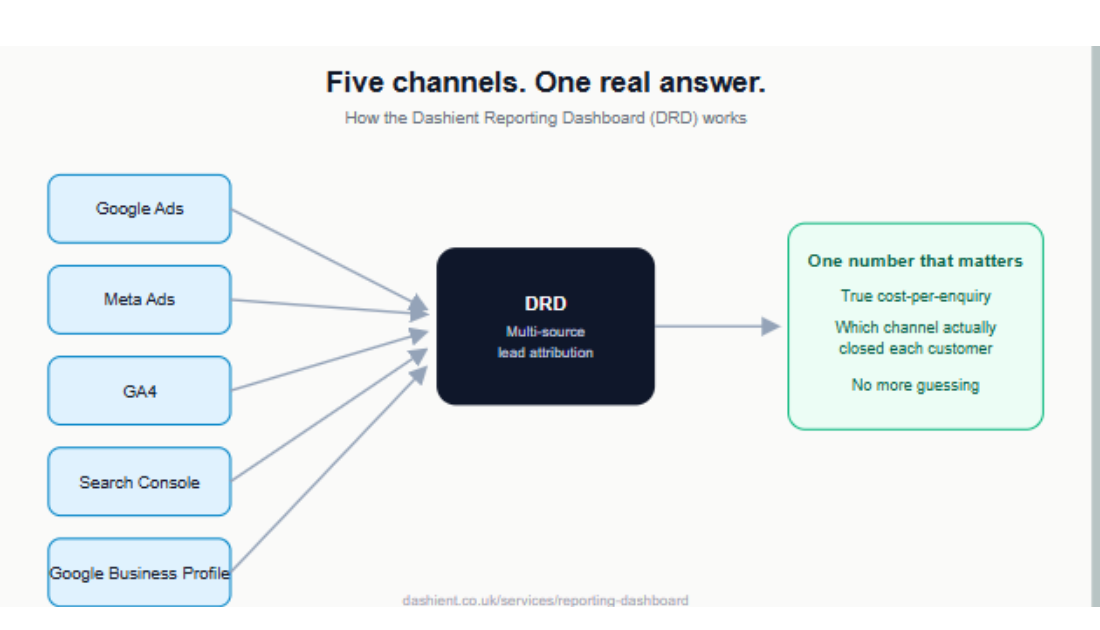
One dashboard, five channels, one honest number
The Dashient Reporting Dashboard (DRD) pulls Google Ads, Meta Ads, GA4, Search Console and Google Business Profile into one place, ties every one of those five sources back to your real enquiries — calls, form submissions, bookings — and shows you a single, honest number: blended cost-per-enquiry, by channel.
No more guessing. No more last-click bias. No more agency reports that only show the metrics that flatter the agency. For the full walkthrough of how this works in practice, see our guide to multi-source lead attribution for UK service businesses.
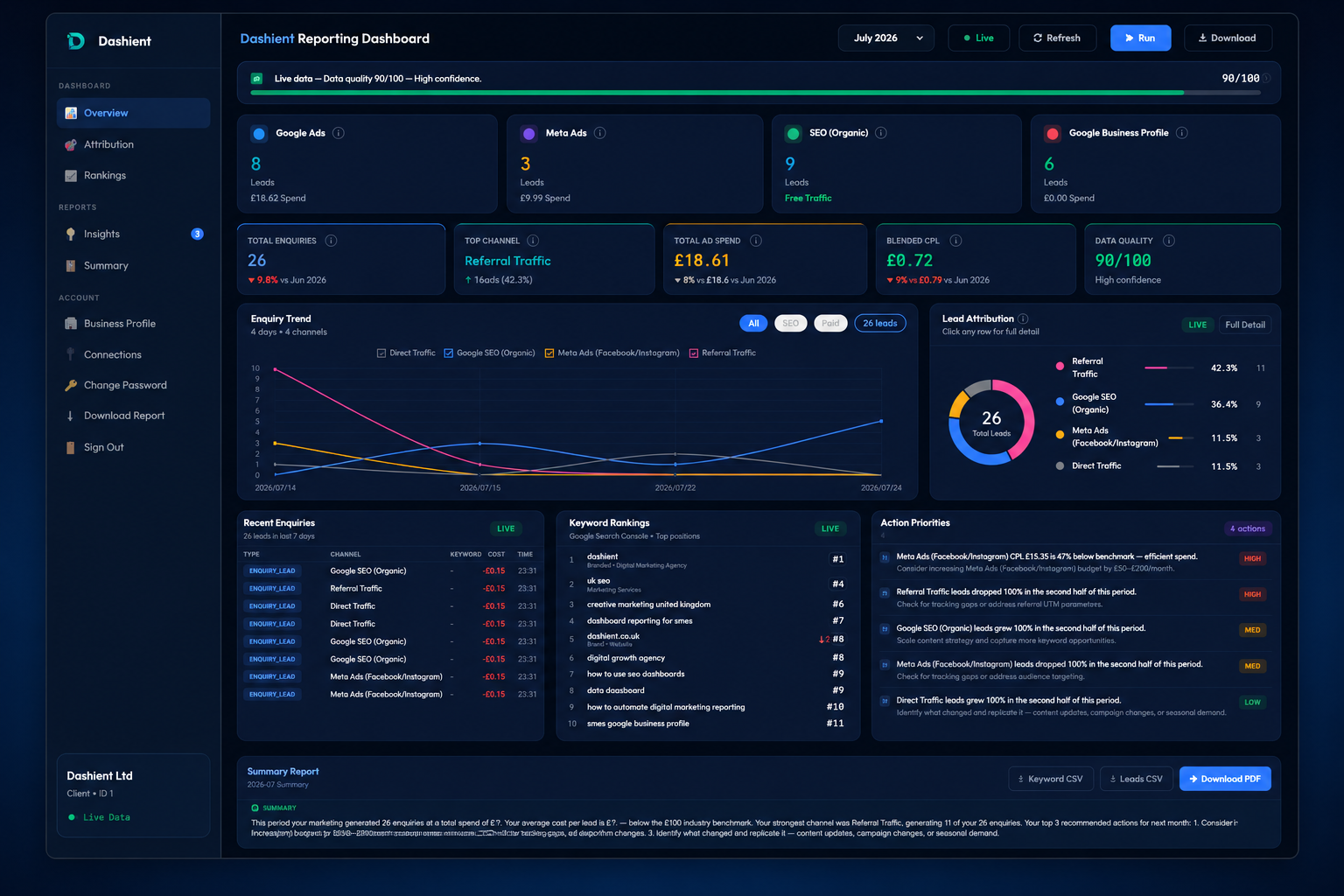
What DRD actually shows you:
- Which of your five channels is genuinely producing enquiries, and which is riding on the credit of another.
- Your true cost-per-enquiry, blended across every channel — not the misleading per-platform CPC.
- Enough clarity to make a 30% budget cut or a 30% budget increase with confidence, instead of a guess.
Important: DRD isn't just for local trades. Everything above this section was about local service businesses because that's where Google Ads CPC data is easiest to illustrate. But the attribution problem DRD solves — five disconnected channels, no single source of truth, last-click reporting hiding the real picture — hits every UK SME running paid and organic marketing together: ecommerce, SaaS, clinics, professional services, multi-location retailers, all of it. If you're spending money to be found on Google and Meta and you can't confidently say which channel is actually paying for itself, DRD is built for you.
Frequently asked questions
What to do next
Do the maths on your own numbers first — average customer value, target CAC, realistic conversion rate. Get the tracking right before you launch. Give it 90 days minimum.
If you'd like Dashient to run your Google Ads, book a free Google Ads review first — we'll audit your existing account before you commit more budget. Your ad spend is billed directly by Google to your own account, always. Our fee is management only, always.