SEO vs PPC: Which Gives Faster ROI for Small Businesses?
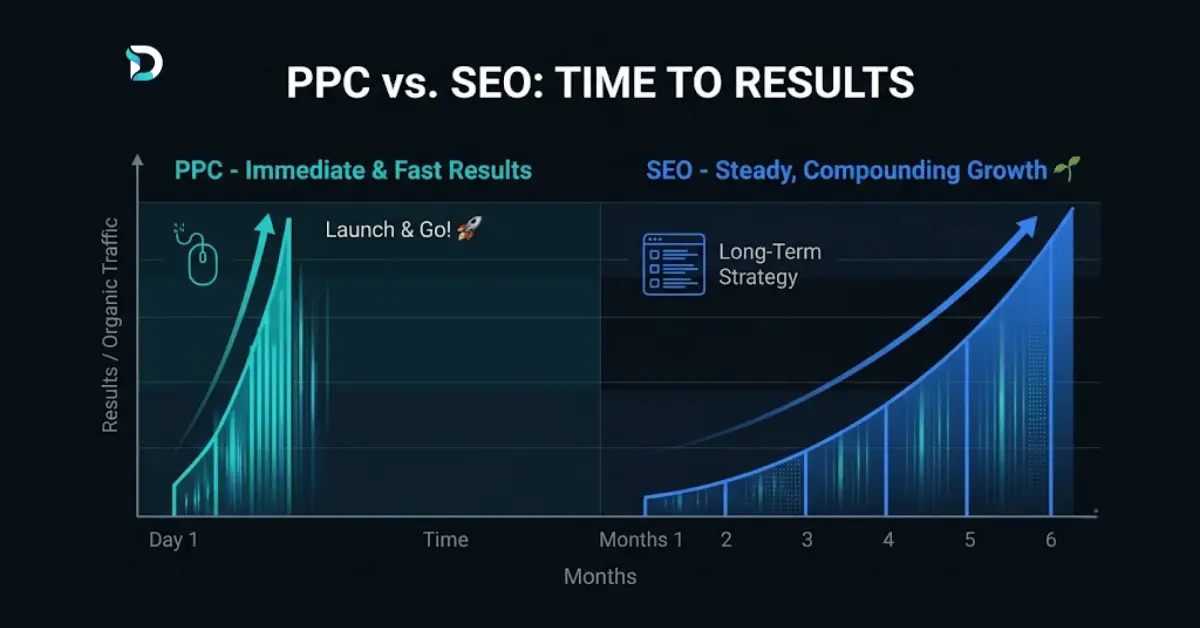
PPC (pay-per-click) gives faster ROI for small businesses because it can generate leads within days of launch, while SEO usually takes three to six months to show meaningful results — but SEO tends to deliver stronger, cheaper ROI over the long run. The right choice depends on how quickly you need results, your budget, and whether you're optimising for short-term leads or long-term growth.
In this guide, we'll break down exactly how SEO and PPC compare on speed, cost and long-term value, so you can decide which one — or which combination — is right for your business.
What Is SEO?
Search Engine Optimisation, or SEO, is the process of improving your website so it ranks higher in organic (unpaid) search results on Google. It covers everything from keyword research and on-page content to technical performance and backlinks.
SEO is a long-term investment. It typically takes 3 to 6 months before you see a real shift in rankings and traffic, and competitive industries can take longer. The upside is that once you rank, that traffic keeps arriving without paying for every click. If you want to explore this in more depth, our SEO services page walks through how we approach organic growth for UK service businesses.
What Is PPC?
Pay-Per-Click (PPC) advertising, such as Google Ads, puts your business at the top of search results immediately — you pay a fee each time someone clicks your ad. Unlike SEO, results are visible from day one.
This makes PPC the faster route to leads and enquiries, especially for new websites with no existing organic authority. The trade-off is that traffic stops the moment you stop paying. You can see how we structure and manage campaigns on our paid ads services page.
SEO vs PPC: Speed to Results
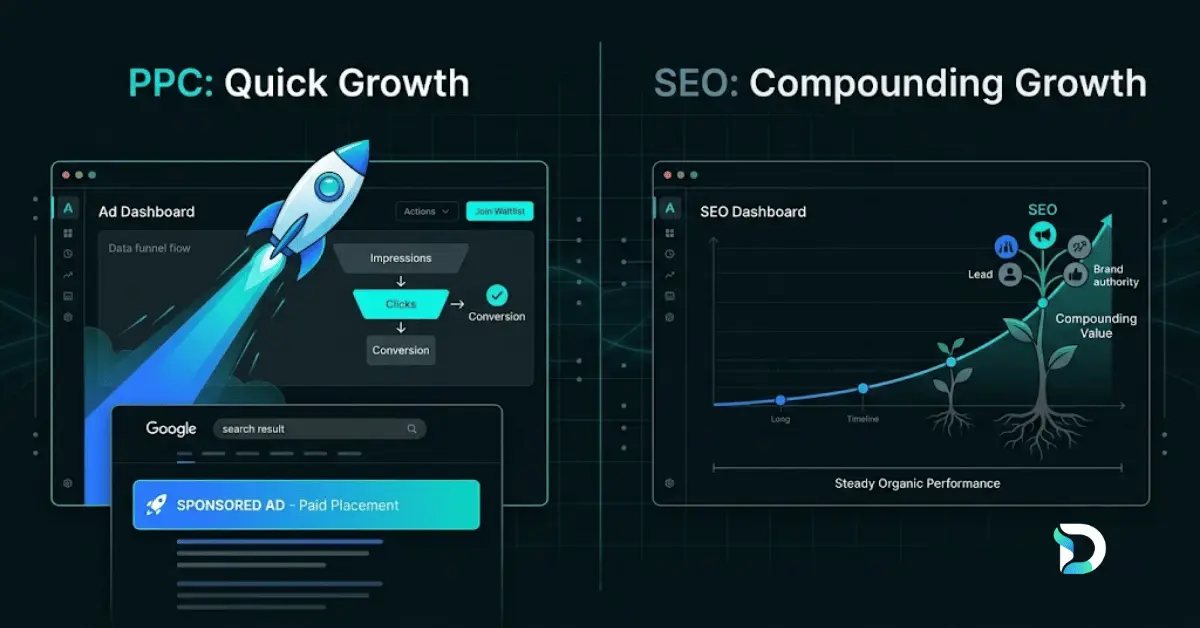
If speed is your priority, PPC wins outright:
- PPC: leads and website traffic within 24–48 hours of campaign launch.
- SEO: measurable ranking improvements typically start at 8–12 weeks, with stronger results at 3–6 months.
For a business that needs enquiries this month — a seasonal launch, a new location, or simply an empty diary — PPC is almost always the faster path to ROI.
SEO vs PPC: Cost and Long-Term ROI
Cost is where the picture flips. PPC ROI is fast but capped by budget; the moment spend stops, so does the traffic. SEO requires more patience but compounds over time:
- PPC: consistent monthly cost per click; ROI is immediate but temporary.
- SEO: upfront investment in time and optimisation; ROI builds slowly but keeps paying back long after the work is done.
Many of the small businesses we work with find PPC delivers the fastest initial ROI, while SEO becomes the stronger, more cost-efficient channel from month six onward. Running both together is often the smartest way to get quick wins now while building organic traffic for later.
So, Which Should You Choose?
- Choose PPC if you need leads fast, are testing a new offer, or have a launch deadline.
- Choose SEO if you're building for the next 12 months and want to reduce your dependence on ad spend.
- Choose both if you want short-term leads from PPC while SEO builds momentum in the background.
Whichever route you take, the real challenge most small businesses face isn't picking SEO or PPC — it's knowing which one is actually working.
What Is a Marketing Reporting Dashboard and Why Every Agency Needs One
Running SEO and PPC side by side is common — but most business owners can't easily see which channel is actually bringing in enquiries. Ad platforms report clicks, analytics tools report sessions, and none of them talk to each other. That's exactly the gap a marketing reporting dashboard closes: one live view that pulls ad spend, organic search performance, local presence and enquiries into a single place, so you can see which pound spent is actually working.
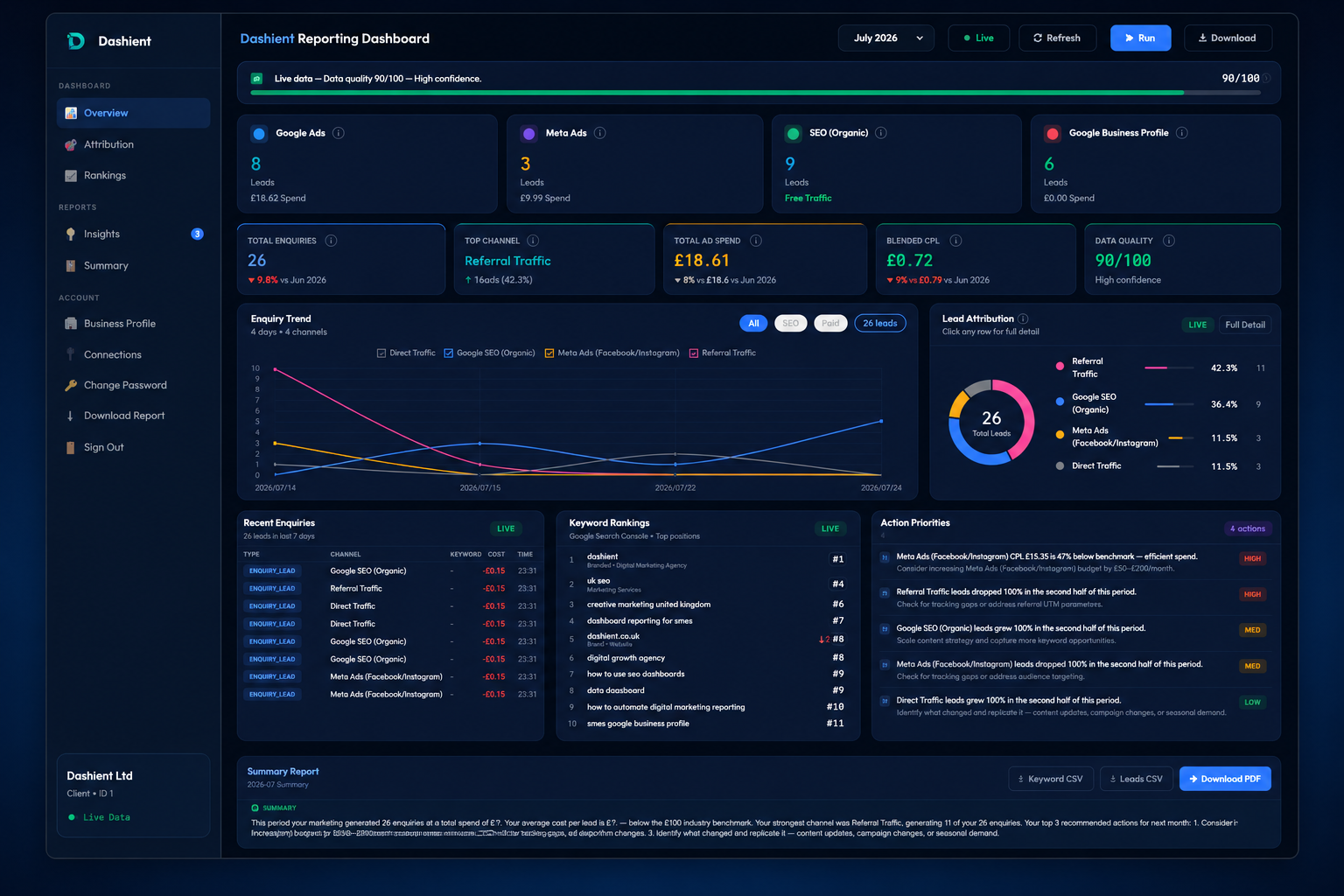
The Dashient Reporting Dashboard (DRD) pulls Google Ads, Meta Ads, GA4, Search Console and Google Business Profile into one dashboard, ties every one of those five sources back to your real enquiries — calls, form submissions, and bookings — and shows you a single, honest number: blended cost-per-enquiry, by channel. No more guessing. No more last-click bias. No more agency reports that only show the metrics that flatter the agency.
What DRD actually shows you:
- Which of your five channels is genuinely producing enquiries, and which is riding on the credit of another.
- Your true cost-per-enquiry, blended across every channel — not the misleading per-platform CPC.
- Enough clarity to make a 30% budget cut or a 30% budget increase with confidence, instead of a guess.
Not just for local businesses: any UK SME spending on Google and Meta who can't confidently say which channel is actually paying for itself needs this — ecommerce, SaaS, clinics, professional services, multi-location retailers, all of it.
Frequently asked questions
Final Thoughts
There's no single winner in the SEO vs PPC debate — PPC wins on speed, while SEO wins on long-term, sustainable ROI. The businesses that grow fastest usually run both, and use a tool like the Dashient Reporting Dashboard to see exactly what's paying off, so budget goes toward what's actually generating leads — not just what looks busy.