Seasonal Business? Here's Why Your Fixed Ad Budget Is Losing You Money Every Quarter

A seasonal business advertising budget is an ad spend plan that changes month to month instead of staying fixed all year — putting more money behind campaigns during peak demand and less during quiet periods. UK businesses that sell more at certain times of year (gardening, events, tourism, fashion, home improvement and more) tend to get a stronger return on ad spend when their budget flexes with demand rather than staying the same every month. Dashient helps UK businesses plan and manage this kind of flexible budget through its paid ads service, giving owners a clear, data-backed view of when to spend more and when to pull back.
Most small business owners set an advertising budget once, usually in January, and leave it running unchanged for the rest of the year. For a lot of businesses, that works fine. But if you run a seasonal business — a garden centre, a wedding venue, a ski shop, a Christmas market stall, a holiday cottage, or anything else where demand rises and falls with the calendar — a flat, fixed ad budget can quietly cost you money every single quarter.
You end up spending the same amount chasing customers in your quiet months as you do in your busiest ones. That means wasted spend when nobody's buying, and missed sales when everybody is. This guide looks at why that happens, how much UK businesses typically spend on ads, and how a seasonal marketing spend plan fixes the problem.
Why a Fixed Ad Budget Fails Seasonal Businesses

A fixed monthly budget assumes one thing that isn't true for seasonal businesses: that demand stays the same all year round. In reality, most seasonal businesses see two very different problems play out at the same time.
- Overspending in quiet months: your ads keep running at full pace even when very few people are actively searching or ready to buy, so cost per lead climbs and budget disappears with little to show for it.
- Underspending in peak months: the same flat budget that felt fine in a quiet month simply isn't enough once demand spikes, so you get outbid, your ads stop showing, and competitors pick up the customers who would have come to you.
The result is a business that spends fairly consistently all year, but earns very inconsistently. Fixing that isn't about spending more overall — it's about spending in the right months.
How Much Should You Spend on Ads in the UK?
There's no single figure that suits every business, because it depends on your margins, your sector, and what you're trying to achieve. That said, a common starting point used by many UK small businesses is to budget somewhere between 7% and 12% of revenue on advertising when the goal is steady growth.
For a seasonal business, thinking about that number as one flat monthly amount misses the point. It's more useful to think in ranges across the year:
- A lower, steady spend in quiet months — just enough to stay visible and keep bringing in the enquiries that still exist.
- A significantly higher spend in the run-up to and during peak season — often two to three times your quiet-month budget — to capture demand while it's there.
This is the core idea behind seasonal marketing spend: the total budget for the year might not need to change much, but where it's placed matters a great deal.
Building a Seasonal Marketing Spend Plan That Works
A workable seasonal business advertising budget usually comes from four simple steps:
- Map your own demand calendar. Look back at the last 12 to 24 months of sales, bookings or enquiries and mark out your genuine peak, shoulder and quiet periods — don't guess, use your own numbers.
- Set a minimum always-on budget. Keep a small, consistent spend running even in quiet months so your business stays visible and you don't have to rebuild momentum from zero each season.
- Build in a flexible top-up budget. Release extra spend a few weeks ahead of your peak period, not on the first day of it, so campaigns have time to gain traction before demand arrives.
- Review more often in peak season. Check performance weekly when it's busy and monthly when it's quiet, so you can react quickly when it matters most.
How Dashient Helps You Spend Smarter, Not Just More
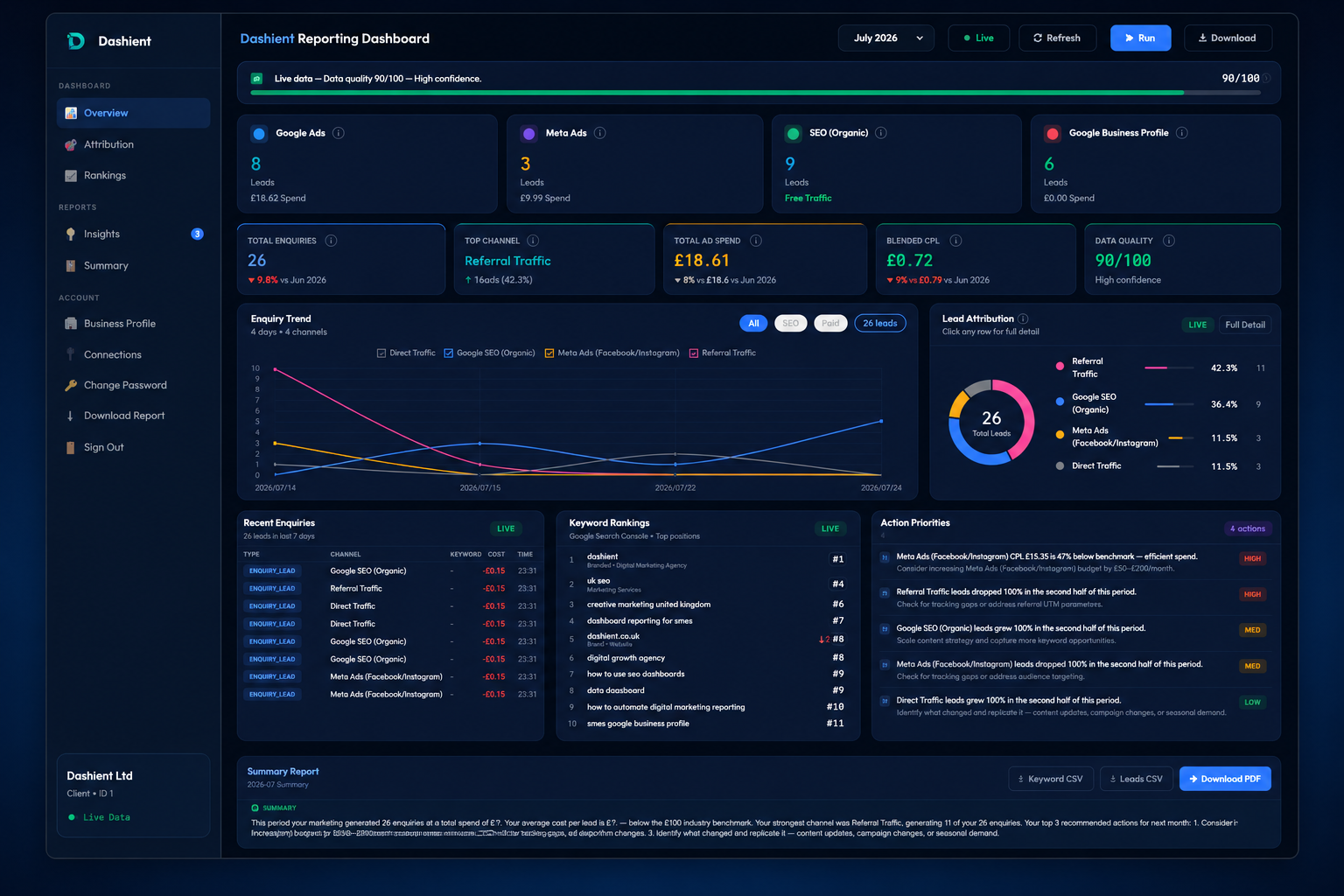
This is exactly the kind of planning our paid ads service is built around. We manage Google Ads and Meta Ads campaigns with your seasonal patterns in mind, so budget moves towards the weeks that actually drive sales, instead of sitting flat all year.
Alongside the ads themselves, the Dashient Reporting Dashboard (DRD) shows you exactly where your clicks and traffic are coming from, updated daily. Instead of waiting for a monthly report, you can see what's working while a campaign is still live and adjust before the budget is spent.
DRD is also built to cut through the vanity metrics that look impressive but don't reflect real business results, so you're always looking at the numbers that actually matter — leads, sales and return on ad spend, not just clicks and impressions. We broke down that problem in detail in what vanity metrics hide. And if you're weighing up paid ads against organic search, our comparison of SEO vs PPC for faster ROI is a useful next read.
Try It Risk-Free: 30-Day Free Trial
DRD is available on three packages to suit businesses at different stages, and every plan comes with a 30-day free trial, so you can see your own seasonal data on the dashboard before committing to anything. See the packages and start your free trial — it's a low-risk way to watch your demand curve take shape.
Frequently asked questions
Final Thoughts
If your business has a season, your advertising budget should have one too. A fixed monthly spend might feel simple, but for a seasonal business it usually means wasting money when things are quiet and missing sales when things are busy. A flexible seasonal marketing spend plan — built around your own demand calendar and backed by clear reporting — lets you put your budget where it actually earns a return.
If you'd like help building a seasonal advertising budget, or want to see how our reporting dashboard tracks it, book your free growth audit to talk it through with our team. You can also follow Dashient on Facebook and LinkedIn.