Marketing Attribution Models for UK B2B Service Firms: A Complete Breakdown
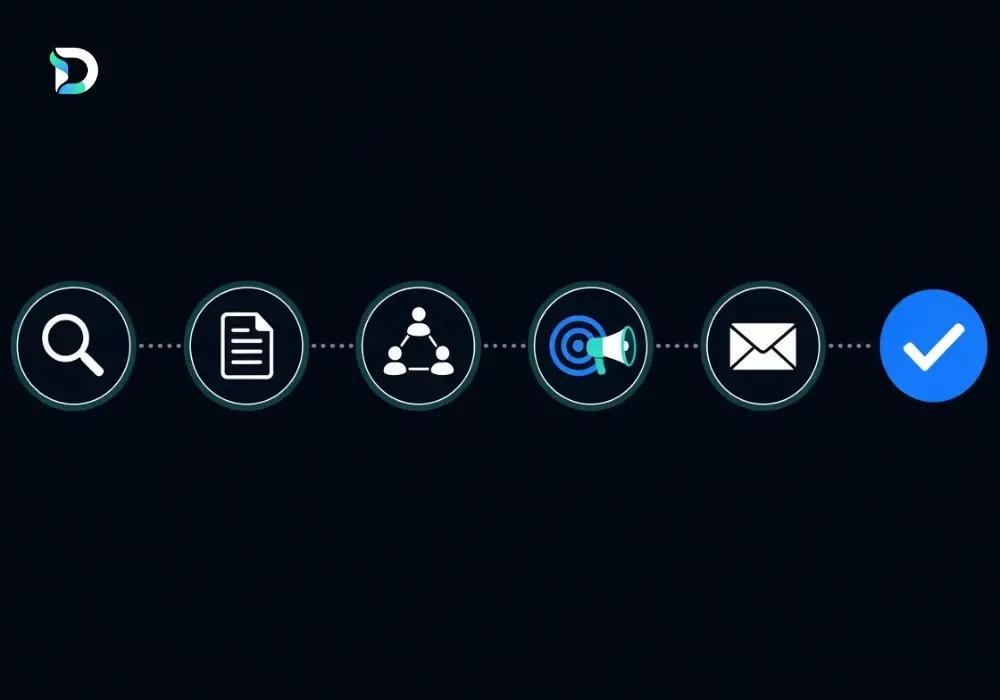
Most UK B2B service firms can tell you how many leads they got last month. Far fewer can tell you, with any confidence, where those leads actually came from. A prospect sees a LinkedIn post, forgets about it, searches your service on Google a week later, reads a blog post, and finally submits a contact form after clicking a paid ad. Which channel gets the credit? Marketing attribution is how you answer that question.
What Is Marketing Attribution?
Marketing attribution is the process of giving credit to the marketing steps that helped a person become a customer. Instead of assuming the very last thing someone did before signing up was the only thing that mattered, attribution looks at the whole journey — search, content, social media, paid ads, email and direct visits — and works out how much each step likely contributed to the final decision.
It's easy to confuse attribution with analytics, but they answer different questions. Analytics shows you what happened on your website. Attribution explains why it happened — which marketing activities deserve the credit for turning a lead into a client.
Why Marketing Attribution Matters for UK B2B Service Firms
B2B buying journeys in the UK are rarely quick. A potential client might read an article, look at your Google Business Profile, compare you with two competitors, and only ask a question weeks later after several visits. If you only count the final click, you risk cutting the SEO article or awareness campaign that truly started the journey — simply because it wasn't the last thing the prospect saw before converting.
For firms running SEO, Google Ads and Meta Ads at the same time, this problem is even bigger. Without attribution, budget tends to drift toward the channel that's easiest to measure — usually paid search — while the channels that build trust earlier in the journey get starved of the money that would help them work.
Common Marketing Attribution Models
There's no single "correct" model. Each one answers a slightly different question, and the right choice depends on your sales cycle and the data you have available.
First-Touch Attribution
Gives full credit to the very first interaction — for example, an organic search visit. Useful for understanding what brings new prospects into your world, but it ignores everything that happened afterwards.
Last-Touch Attribution
Gives full credit to the final interaction before conversion, such as a retargeting ad. It's the simplest model and the default in most ad platforms, but it overstates bottom-of-funnel channels and understates awareness-stage marketing.
Linear Attribution
Splits credit equally across every touchpoint in the journey. Simple and fair on paper, but it assumes every interaction mattered equally, which is rarely true in practice.
Time-Decay Attribution
Gives more credit to touchpoints closer to the conversion. This suits shorter buying cycles better than long B2B journeys, where an early touchpoint can matter just as much as a late one.
Position-Based Attribution
Usually weights the first and last touchpoints most heavily, with the remaining credit spread across the middle — a reasonable middle ground for firms that want to value both discovery and conversion. It's also known as U-shaped attribution; we cover exactly how it works, with the standard weighting, in our guide to U-shaped attribution.
Data-Driven Attribution
Uses your own conversion data to work out which touchpoints actually correlate with closed business, rather than applying a fixed rule. It requires a reasonable volume of clean data to be reliable.
Attribution Model Comparison
| Model | Main credit | Best for | Main limitation |
|---|---|---|---|
| First-touch | First interaction | Understanding acquisition | Ignores later interactions |
| Last-touch | Final interaction | Simple conversion reporting | Ignores earlier interactions |
| Linear | Equal split | Simple multi-touch view | Assumes equal influence |
| Time-decay | Recent touchpoints | Shorter buying journeys | Undervalues early touchpoints |
| Position-based | First + last | Lead-generation journeys | Fixed weighting oversimplifies |
| Data-driven | Data-based | Larger, clean datasets | Needs sufficient volume of data |
Common Attribution Mistakes
- Relying only on last-click data from a single ad platform.
- Never connecting CRM or sales data back to marketing channels.
- Missing or inconsistent UTM tracking across campaigns.
- Treating every lead as equally valuable, regardless of source or quality.
- Ignoring Google Business Profile calls and direction requests as a lead source.
- Comparing platform-reported numbers (Google Ads, Meta, GA4) that were never reconciled, and assuming the differences are errors.
How a Marketing Attribution Dashboard Helps
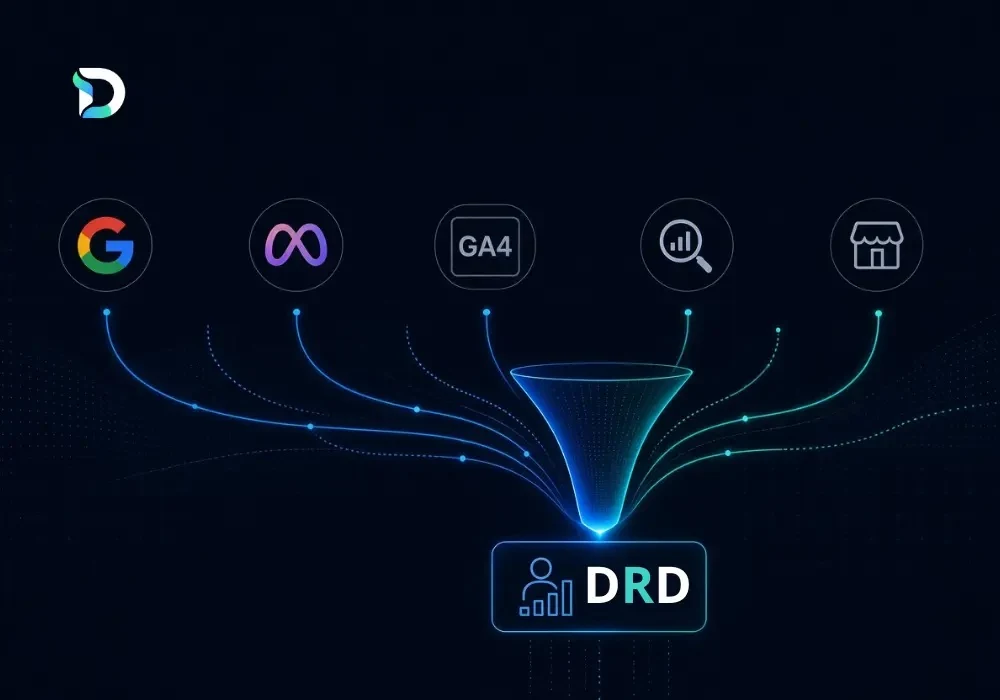
Doing this manually — pulling numbers from Google Ads, Meta Ads, GA4, Search Console and Google Business Profile into a spreadsheet every month — is slow, and it's easy for the numbers to disagree with each other. This is the exact problem the Dashient Reporting Dashboard (DRD) is built to solve for UK service businesses.
The DRD connects Google Ads, Meta Ads, GA4, Search Console and Google Business Profile into a single live view, then matches every enquiry — form submissions, click-to-call taps and direction requests — back to the channel that produced it, using a multi-touch model rather than last-click alone. Instead of Google Business Profile quietly taking credit for a lead that actually started with a Meta ad three days earlier, you see the real path. You can see the plans and how it works on the pricing page.
Setup typically takes a couple of hours across two calls, the dashboard refreshes daily rather than sitting in a monthly PDF, and it's built to run alongside SEO and Google/Meta Ads management — so the attribution, the campaigns and the reporting all work from the same set of enquiries. If you'd like the wider view of how reporting tools fit together, see our guide to marketing reporting tools for UK agencies.
Frequently asked questions
Final Thoughts
There's no perfect attribution model, but there is a wrong approach — and it's the one most UK service firms default to by accident: trusting whichever number is easiest to see. Choosing a model that reflects how your clients actually buy, and pairing it with proper cross-channel data, is what turns marketing reporting from a monthly guessing game into a genuine decision-making tool.
If you'd like to see how multi-source attribution could work for your business, join the Dashient Waitlist or book a free call to talk it through. You can also follow Dashient on Facebook and LinkedIn.