Your SEO Agency's Report Is Lying to You (Here's the Data They Don't Show)
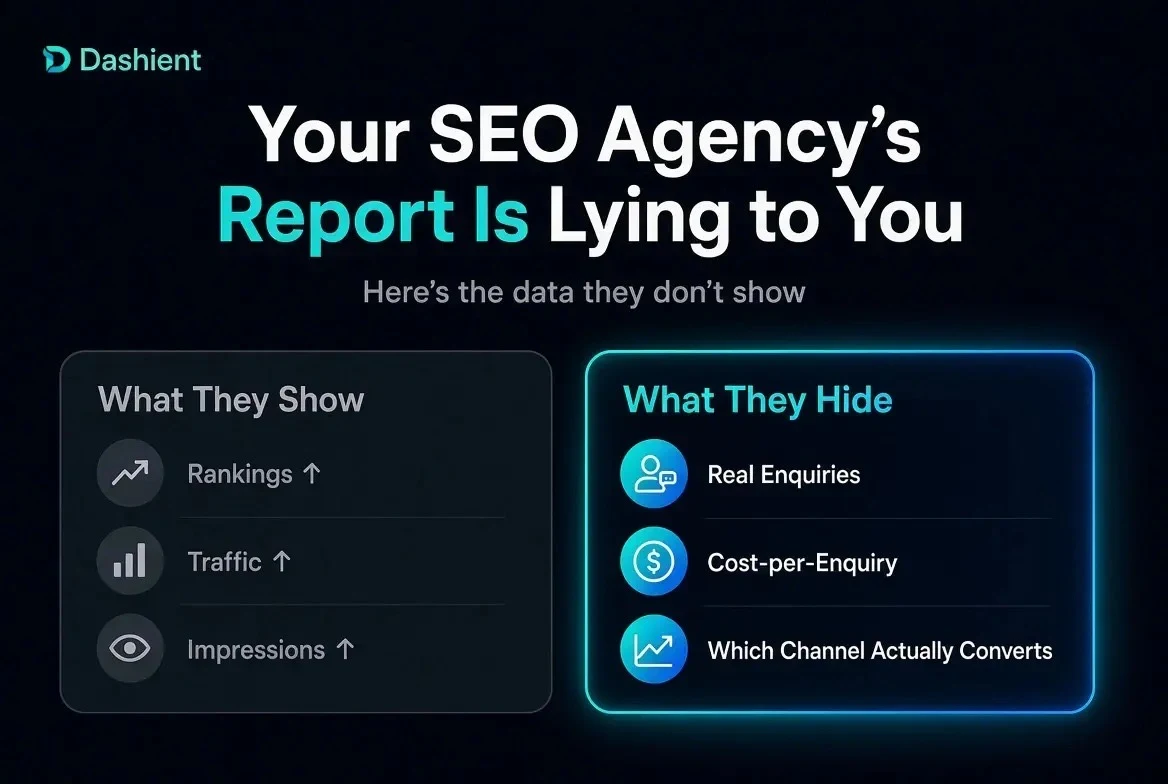
Most SEO and ads reports show rankings, traffic and clicks - metrics that look good but don't confirm a single real enquiry. A marketing reporting dashboard like the Dashient Reporting Dashboard (DRD) closes that gap by connecting Google Ads, Meta, GA4, Search Console and Google Business Profile to your actual calls, form fills and bookings - so you see which channel really produces enquiries, not just which one produced clicks.
Every month, thousands of UK businesses open a PDF from their SEO or ads agency and see the same thing: rankings moved up, traffic went up, impressions went up. It looks like progress. But ask a simple follow-up question - "so which of these actually turned into a paying customer?" - and most reports go quiet. That gap between what's reported and what's real is exactly where budgets get wasted.
What Your Monthly SEO Report Actually Shows (And What It Hides)
A typical report shows keyword positions, organic sessions, and maybe a leaderboard of top pages. These numbers aren't fake; they're just incomplete. They tell you a page is being seen. They don't tell you if that page is producing a phone call, a form submission, or a booking. Traffic and rankings are inputs to your business, not outputs. The output that pays your bills is the enquiry - and that's the one metric most standard reports never actually connect back to a channel.
The Real Problem: Vanity Metrics vs Real Enquiries
This isn't about agencies being dishonest - it's a structural blind spot. Google Ads reports its own conversions. Meta reports its own. Google Analytics uses last-click logic that hands most of the credit to whichever channel happened to close the deal, even if another channel started the journey. None of these platforms talk to each other, so no single report can show you the full, honest path a lead actually took. That's the data most SEO agency reports simply don't show - not because they're hiding it, but because their tools were never built to see it.
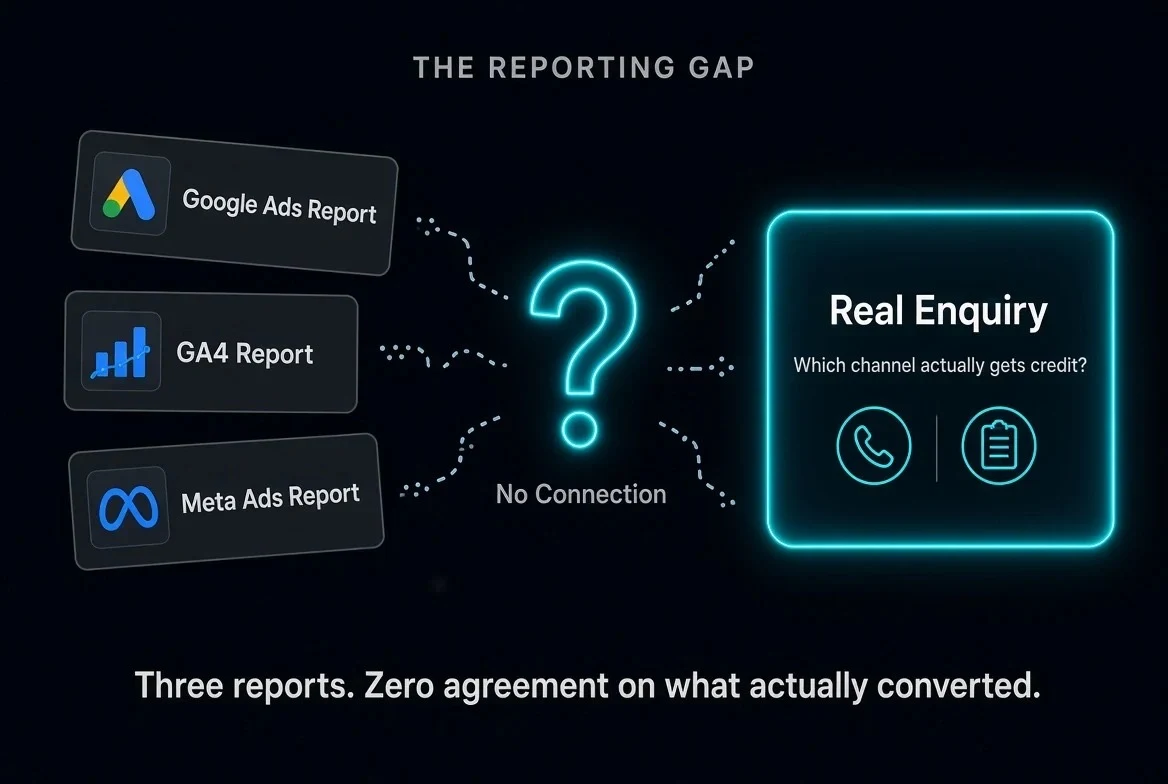
What Is Lead Attribution, and Why It Matters Here
This is where lead attribution comes in - the process of tracing an enquiry back to the marketing channel (or combination of channels) that actually produced it. If you want the full breakdown of how attribution models work, we cover it in detail in what is lead attribution. In short: without attribution, you're managing a marketing budget using guesses dressed up as data.
Why UK Businesses Need a Multi-Touch Attribution Tool, Not Just Rankings
A real customer journey is rarely one click. Someone sees a Meta ad, forgets about it, searches your business two days later, taps a Google Business Profile listing, and calls from their car. Last-click reporting gives 100% of the credit to whichever step happened last - usually organic search or GBP - and zero credit to the ad that started the whole chain. A multi-touch attribution tool avoids this trap by tracking every touchpoint across the journey and splitting credit fairly, so decisions about where to spend next month's budget are based on the full picture, not the last click.
What to Look for in the Best Lead Attribution Tools UK Businesses Can Use
If you're comparing marketing attribution tools for your business, a genuinely useful platform should give you:
- A single, unified view of Google Ads, Meta Ads, GA4, Search Console and Google Business Profile - not five separate logins.
- Enquiries tracked by type: form submissions, click-to-call taps, and direction requests.
- Blended cost-per-enquiry across every channel, not just per-platform CPC.
- Daily-updated data, not a static monthly PDF.
- Weekly flags on which channels are moving up or down, so nothing important gets missed.
This is the standard that separates a genuine analytics platform from a basic traffic dashboard - and it's the same standard growing numbers of UK small businesses now use automated reporting tools to meet, rather than reconciling five spreadsheets by hand every month. For a fuller comparison of the options, see our guide to the best lead attribution tools for UK service businesses.
Introducing the Dashient Reporting Dashboard (DRD)
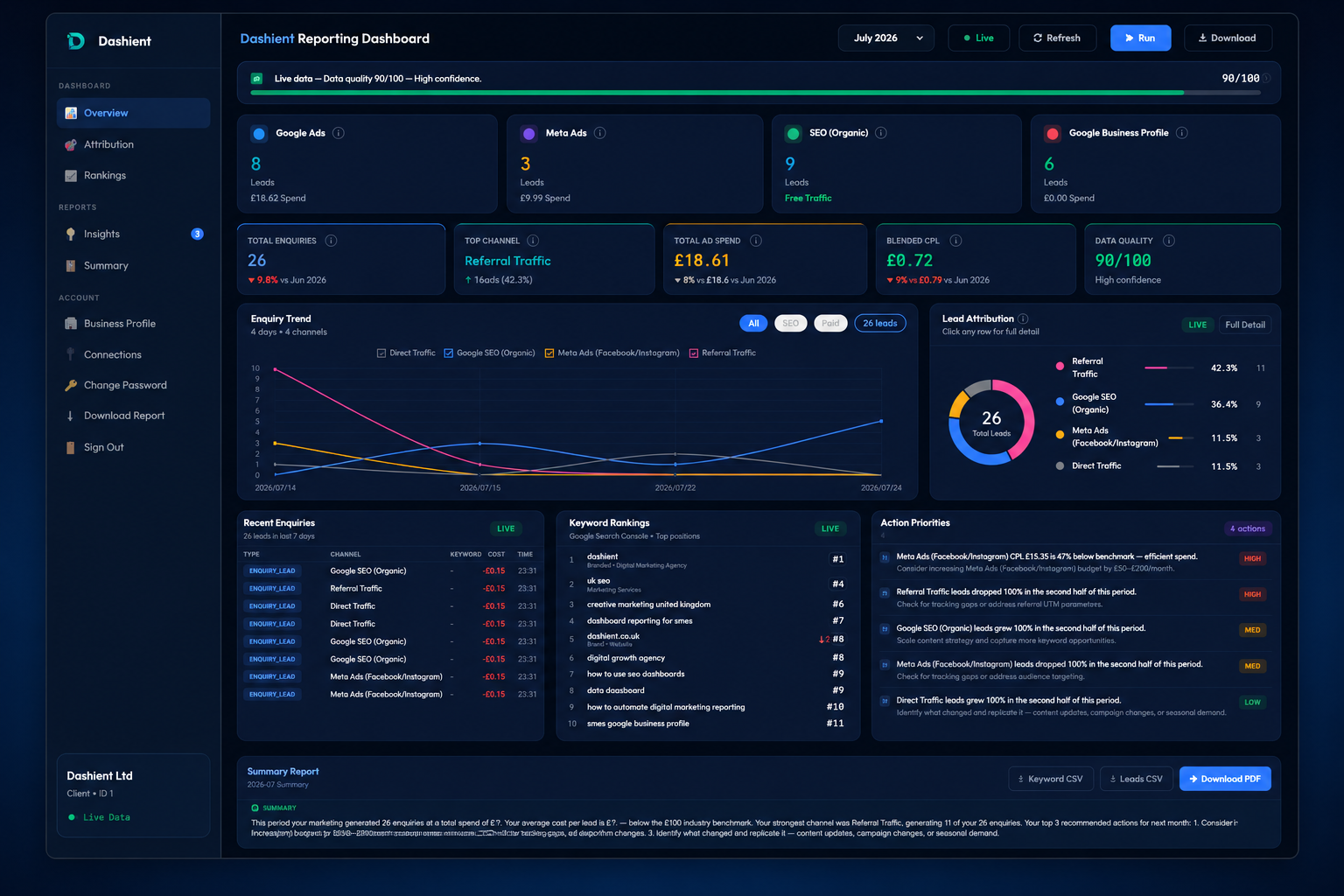
The Dashient Reporting Dashboard (DRD) is a marketing reporting dashboard and lead attribution platform for UK service businesses, built specifically to close the gap described above. One Google login connects Google Ads, GA4, Search Console and Google Business Profile; one Meta login covers Facebook and Instagram - setup typically takes 1-3 hours across two calls, not weeks.
Every enquiry is then matched back to its source using campaign tracking data where available, and grouped by channel where it isn't, so you see leads by channel and type, blended cost-per-enquiry calculated live, and weekly flags on what moved and why. The practical benefit is simple: instead of guessing whether last month's ad spend actually worked, you open one dashboard, refreshed daily, and see the real answer - which channel to grow, which to fix, and which to stop funding. It runs alongside Dashient's own SEO and paid ads delivery, so the attribution data doesn't just sit there; it directly shapes the next month's campaigns and content.
How SEO, Ads and Reporting Work Together
Attribution data is only useful if something acts on it. That's why Dashient pairs the dashboard with its SEO, ads and reporting services - full-service SEO and Google & Meta Ads management, so every ranking gain or campaign change feeds straight back into the same dashboard, and every dashboard insight feeds straight into the next SEO or ads decision. Reporting without execution is just analysis; execution without reporting is just guessing. Together, they're how a marketing budget actually compounds instead of resetting every month.
Frequently asked questions
Final Thoughts
The next time an SEO or ads report lands in your inbox showing rankings up and traffic up, ask the one question that matters: which of these enquiries are real, and which channel actually brought them in? If your current reporting can't answer that with confidence, that's the gap a proper marketing reporting dashboard and lead attribution platform is built to close.
Want to see exactly which channel is driving your enquiries? Book a free audit and we'll walk through your own numbers, no pressure. You can also follow Dashient on LinkedIn and Facebook.