Online Marketing Strategies for UK Small Businesses
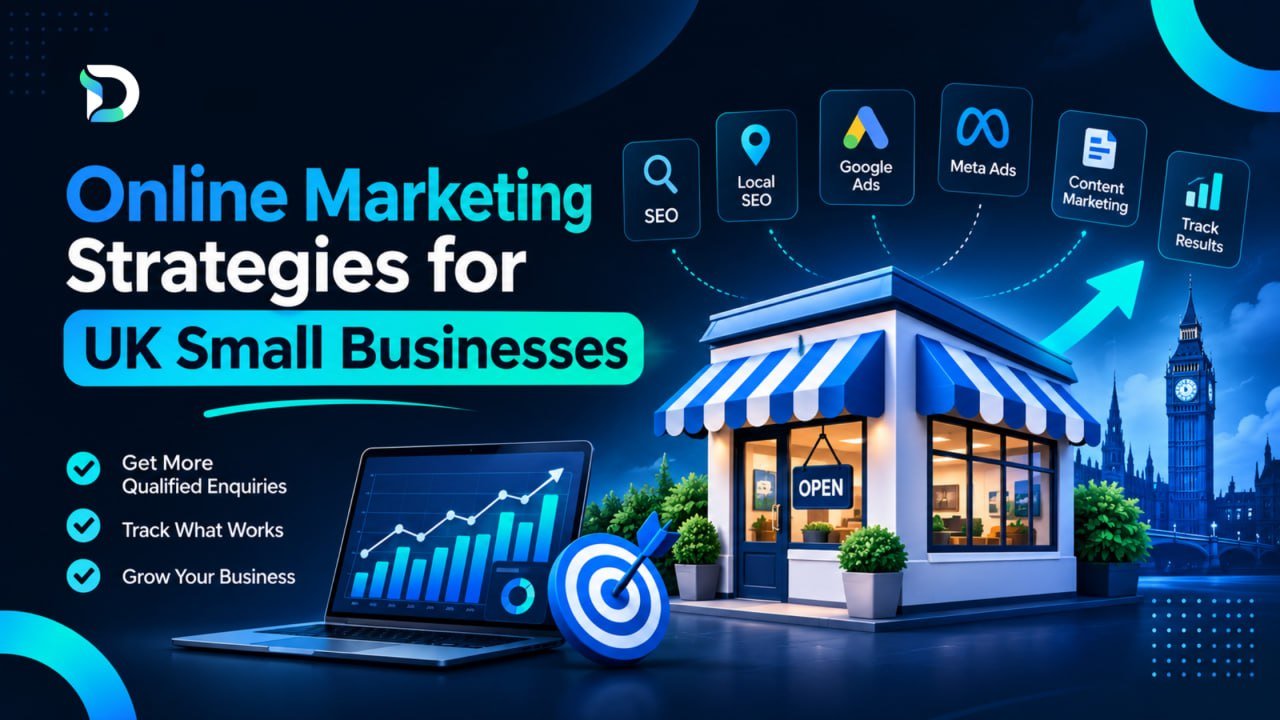
Article brief – publishing details
Online marketing is how most UK customers find a local business today. They search Google, check reviews, compare a few websites and make an enquiry, often within the same hour. For a small business, the challenge is rarely a lack of channels. It is knowing which ones bring in genuine enquiries and which simply burn budget. This guide explains the online marketing strategies that matter most for UK small businesses, and how to measure whether they work.
What Is Online Marketing?
Online marketing covers every activity that attracts customers through the internet: search engine optimisation (SEO), paid search, social media, content, email and your website itself. A strategy ties these together around one goal, such as more qualified enquiries at a sustainable cost. Tactics are single actions, like posting on Facebook. Strategy decides why, for whom, and how you will judge the result.
Why UK Small Businesses Need an Online Marketing Plan
Without a plan, marketing turns reactive: a Facebook boost one month, a Google Ads trial the next, and no way to compare them. A structured approach helps you reach people at the moment they search, build trust, compete with bigger firms locally, and stop spending where results do not appear.
Six Online Marketing Strategies for UK Small Businesses
1. Search Engine Optimisation (SEO)
SEO makes your website easier for Google to understand and more useful to visitors. Results build over months, but organic visibility keeps working without paying per click. Start by giving each service its own page, with clear headings, location details and an obvious way to enquire. Our SEO services cover technical, on-page and content work.
2. Local SEO and Google Business Profile
If you serve a specific area, local SEO is often the quickest organic win. A complete Google Business Profile, correct categories, fresh photos and regular reviews help you appear in map results for searches like “plumber near me”. See how local SEO can put you in front of nearby customers.
3. Google Ads
Google Ads places you at the top of results straight away, which suits businesses that need enquiries while SEO builds. Focus on lead quality rather than click volume: tight location targeting, relevant keywords, negative keywords and call and form tracking. Our Google and Meta Ads management is built around this principle.
4. Social Media and Meta Ads
Facebook and Instagram work best for awareness and retargeting, reaching people before they start searching. Short video such as Reels can build visibility affordably. Dashient’s own Facebook case study shows how organic content and a small, intent-focused ad budget can work together.
5. Content Marketing
Helpful content answers the questions customers ask before buying: costs, timescales, comparisons and common problems. Each article supports your service pages, builds topical authority and gives you something useful to share on social media and email.
6. Website Conversion and Lead Tracking
Traffic only matters if visitors enquire. Make your phone number tappable, keep forms short, show reviews and place a clear call to action on every page. Then track form submissions, calls and direction requests. The Dashient Reporting Dashboard brings Google Ads, Meta, GA4, Search Console and Google Business Profile into one view, so you can see which channel genuinely produces enquiries.
| Channel | Main purpose | Typical speed |
|---|---|---|
| SEO | Long-term organic visibility | Months |
| Local SEO | Map and “near me” visibility | Weeks to months |
| Google Ads | Enquiries from active searchers | Days |
| Meta Ads | Awareness and retargeting | Days to weeks |
| Content | Authority and trust | Months |
How to Choose the Right Online Marketing Channels
Start with your goal, then look at customer behaviour. If people search for your service, prioritise SEO and Google Ads. If your service is visual or impulse-led, add social media. A sensible starting point for many local service businesses is Google Business Profile plus one paid channel, adding more as data comes in. Set a budget you can sustain for at least three months and judge it by cost per enquiry, not clicks.
Build Your Online Marketing Strategy Step by Step
- Set one measurable goal, such as 20 qualified enquiries a month.
- Define your ideal customer and the area you serve.
- Check what local competitors rank for.
- Choose one or two channels to begin with.
- Set up GA4, call tracking and form tracking before you spend.
- Review weekly and adjust monthly.
Common Online Marketing Mistakes
Spreading budget across too many channels, running ads without conversion tracking, ignoring Google Business Profile, counting spam and sales pitches as leads, and judging success by impressions are the mistakes we see most often. Each one hides what is really working.
How to Measure Online Marketing Success
Track qualified enquiries, conversion rate, cost per enquiry, organic visibility and, where possible, revenue by channel. Compare channels on the same basis. Cost per click says little; cost per genuine enquiry shows whether marketing pays for itself.
Black Friday: live now 50% off your first month on ads plans* Plus free Dashient Reporting Dashboard (DRD) and Google Business Profile setup. Book your free audit to claim the offer. *Offer applies to new clients’ first month on ads plans.
Frequently Asked Questions
Review Your Online Marketing Strategy with Dashient
Dashient connects SEO, paid campaigns and reporting so you can see where your enquiries really come from. If you would like an honest look at your current online marketing, book a free audit or explore our pricing.