Local SEO for Multi-Service Businesses: How to Structure Your Website
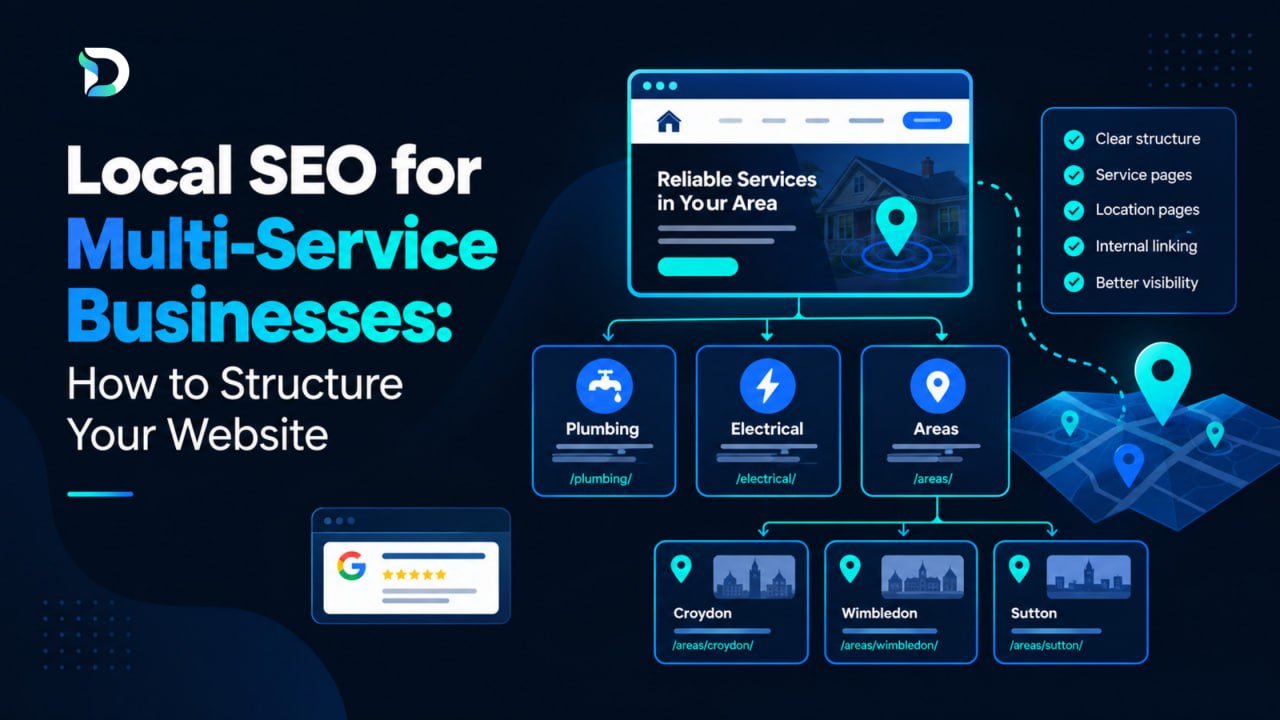
To structure a website for local SEO for multi-service businesses, give each core service its own page, create location pages only where you can add real local value, and connect everything with clear internal links. Keep each page focused on one purpose so pages do not compete. No structure guarantees rankings, but it helps visitors and search engines understand what you do and where.
Why Does Website Structure Matter for Local Businesses?
If one "Services" page lists everything, visitors struggle to find the right job and search engines struggle to match you to specific searches. A clear hierarchy of home page, service pages and area pages solves both problems.
Build a Dedicated Page for Each Core Service
Someone searching "boiler repair" wants a page about boiler repair, not a general list. Give each core service a page that covers:
- What the service includes and what it does not.
- How the process works.
- Real evidence, such as reviews and photos of your work.
- A few FAQs and a clear way to enquire.
Create Location Pages Only Where They Add Real Value
A physical branch and a service area are different things. A location page makes sense when you genuinely serve the area and can say something useful about it, such as the jobs you do there. Copying one page and swapping the town name adds nothing, and a town name in the title or URL does not make a page rank.
Should You Create Service + Location Pages?
Not always. Take a hypothetical firm offering plumbing and electrical work in London and Croydon. A plumbing page, an electrical page and one useful Croydon page may be enough. A separate "plumber Croydon" page only earns its place if it holds distinct content, such as local examples or a different team. If it would repeat another page, skip it.
Example Website Structure
| Page (hypothetical) | Job | Links to |
|---|---|---|
| Home | Introduce services and areas | Service pages, area hub |
| /plumbing/ | Main plumbing service | Boiler repairs, leak repairs, area hub |
| /electrical/ | Main electrical service | Rewiring, testing, area hub |
| /areas/ | Hub of areas you really serve | Each location page |
| /areas/croydon/ | Useful local detail | Relevant services |
Connect Everything With Internal Linking
Link from the home page to each service and to your areas hub. Link service pages to the locations they serve, and location pages back to the services offered there. Use descriptive anchor text, and make sure no page is orphaned, meaning nothing links to it.
Technical Basics and Common Mistakes
Make sure pages can be crawled and indexed, with descriptive URLs, an XML sitemap, canonical tags where appropriate and a good mobile experience. Structured data can help describe your business, but it does not guarantee rankings. Avoid these mistakes:
- One generic page for every service.
- Thin, near-identical location pages.
- Two pages targeting the same search (keyword cannibalisation).
- Claiming areas you do not actually serve.
A Practical Structure Checklist
- Each core service has its own page with unique content.
- Location pages exist only for real, served areas.
- Every page has one clear search purpose.
- Internal links connect services, areas and the home page.
- Your Google Business Profile matches your real business information.
- Calls, forms and direction requests are tracked.
How to Measure Local SEO Performance
A better structure only matters if it brings enquiries. Many local customers phone or ask for directions from your Google Business Profile, so website forms alone miss part of the picture. The Dashient Reporting Dashboard is a lead attribution and marketing reporting tool for UK service businesses. It connects Google Ads, Meta Ads, GA4, Search Console and Google Business Profile, and splits enquiries by source and type: forms, click-to-call taps and direction requests. Genuine-lead classification and spam filtering keep your local SEO numbers clean.
Setup usually takes 1–3 hours and the team does it for you. See how it works. Every plan has a 30-day free trial with no card required.
| Plan | Price | Key features |
|---|---|---|
| Starter | £49/month | 1 business, all 5 sources, genuine-lead classification, monthly PDF, leads CSV |
| Professional | £99/month | Adds U-shaped attribution, weekly reports, lead manager, up to 3 businesses |
| Agency | £199/month | Adds up to 10 client dashboards and priority support |
All prices exclude VAT. See the dashboard plans page. If you need help with the structure itself, our local SEO and SEO services can help, and Google and Meta ads management can support them. Our guides to lead tracking software UK and lead attribution cover tracking in more detail.
Also From Dashient: ScopeCheck
Dashient also runs ScopeCheck, a tool for UK homeowners comparing trade quotes. You add 2–5 quotes for the same job, and it shows what each includes, what is missing and what to ask. There is a free preview with no sign-up.
Frequently Asked Questions
Final Thoughts
Good local SEO structure is simple: one page per core service, location pages only where they help, and clear links between them. Then measure real enquiries, so you know what is working.
Ready to see where your local enquiries come from? Start your free trial for 30 days, no card required. Already a user? Sign in. Want expert help with local SEO and ads? Book Your Free Growth Audit today.